
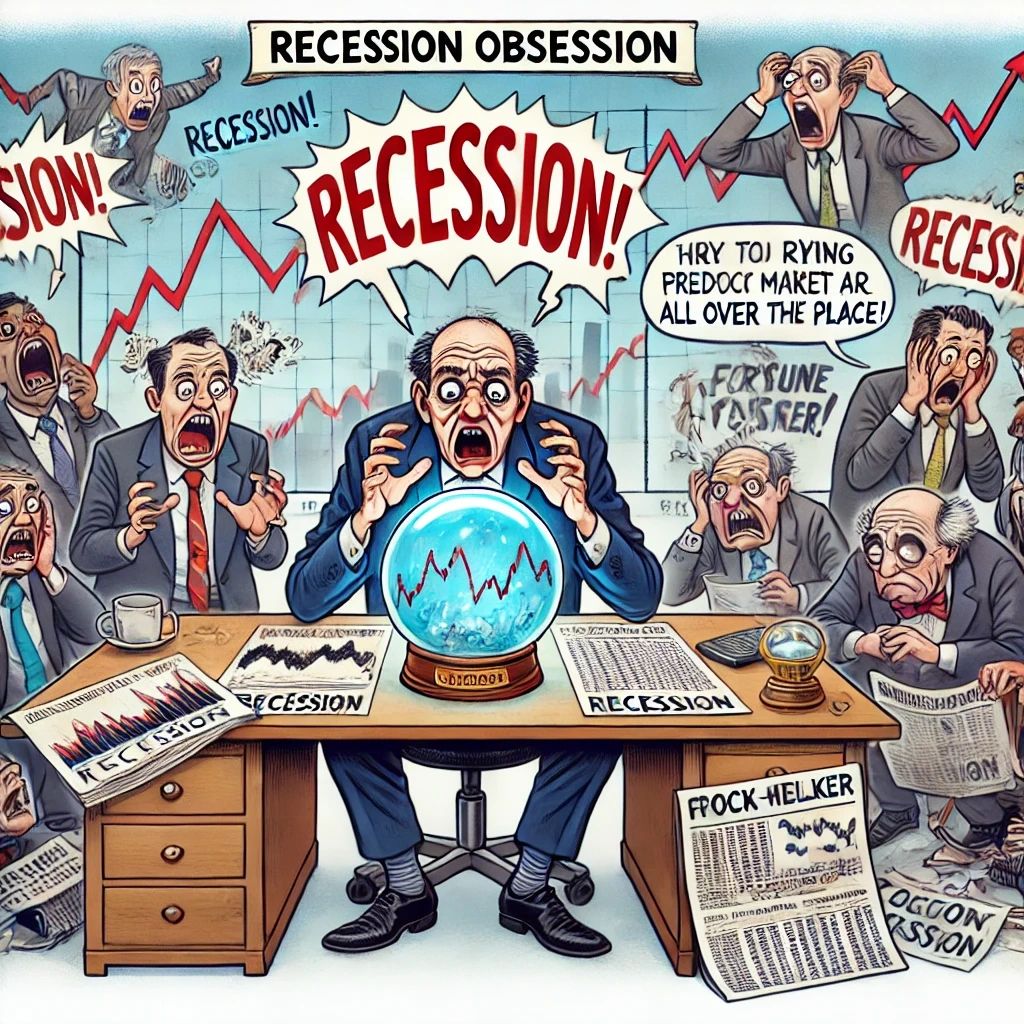
Recession Obsession
Recession Obsession
Last month, the U.S. stock market took a sudden hit between a Friday and a Monday. It happened fast, but it was hard to miss, and most people didn’t look away—more like “watched in shock,” honestly.
The trouble started on that Friday when the Bureau of Labor Statistics announced that the U.S. added 114,000 jobs in July. This was lower than expected and much slower compared to June. To make things worse, the unemployment rate went up from 4.1% to 4.3%, the highest it had been since October 2021. Investors quickly shifted from thinking everything was fine to worrying about a possible recession.
When the word “recession” comes up, the stock market usually drops—and that’s exactly what happened. It’s like the market gets scared not just by recessions themselves, but by the mere idea of one. An economist named Paul Samuelson even joked that the stock market has predicted “nine of the last five recessions,” meaning it overreacts sometimes.
The fear of recession is one of the biggest things that worries investors. The main questions now are: (a) how justified is this fear based on history, and (b) what should long-term investors do about it?
First, we need to accept that recessions are part of the economic cycle. There have been 12 since the end of World War II, which averages out to one every seven years. These numbers come from the National Bureau of Economic Research and are easily found on Wikipedia.
Each of those recessions lasted about a year on average. If you look at the big picture, though, the economy has only been shrinking for about 15% of the time over the last 79 years. For the other 85%, it’s been growing, making huge gains along the way. This is important to remember for some perspective.
(As a side note, the longest recession was during the 2007-2009 financial crisis and lasted 18 months. The shortest one was in 2020 during the COVID lockdown, which lasted only two months before government aid helped turn things around.)
During this time, the stock market has grown significantly. The Standard & Poor’s 500-Stock Index has risen from 16 points after WWII to around 5,500 today, with an average annual return of 11.2%.
So, historically speaking, recessions haven’t happened frequently or lasted long enough to do lasting damage to the economy or long-term investments in major U.S. companies.
But can we predict these recessions and get out of the market before they hit? Unfortunately, I’ve never found a reliable way to do that, and I don’t know anyone who has either.
With that in mind, here’s my personal take. (This is general perspective, not advice for your specific situation.) Since the American economy and the stock market have always bounced back from recessions in the past, and since it’s impossible to predict when they’ll happen, I’ve found it best to ignore the fear of recession and stick to my long-term investment plan.
As a bonus, I also sleep better this way.
Index figures are shown for illustration only. They assume dividends are reinvested and do not reflect fees, expenses or taxes, which would reduce returns. It is not possible to invest directly in an index. Past performance does not guarantee future results.